
The Essential Guide to Kitchen Sanitization: DIY Tips for Health and Safety

Keeping your kitchen clean and sanitized is more than just a chore. It plays a crucial role in protecting your health and preventing foodborne illnesses. Kitchens are hotspots for bacteria and germs, especially on surfaces where food is prepared. This guide explains why sanitizing your kitchen matters and offers simple, effective DIY methods you can use at home, including the bleach dilution method commonly used in restaurants.

Why Kitchen Sanitization Matters
Your kitchen is where raw ingredients meet your hands, utensils, and surfaces. Without proper sanitization, harmful bacteria like Salmonella, E. coli, and Listeria can thrive. These bacteria cause food poisoning, which affects millions of people every year. Even if you wash your dishes and wipe counters, germs can linger in cracks, on cutting boards, and in sinks.
Sanitizing goes beyond cleaning. Cleaning removes dirt and food particles, while sanitizing kills bacteria and viruses. This extra step reduces the risk of cross-contamination and keeps your family safe.
Common Kitchen Germ Hotspots
Knowing where germs hide helps you focus your sanitizing efforts. Pay special attention to:
Cutting boards, especially wooden ones
Sink faucets and handles
Refrigerator handles and seals
Countertops and tabletops
Sponges and dishcloths
Appliance buttons and knobs
Regularly sanitizing these areas lowers the chance of spreading bacteria.
DIY Sanitizing Solutions You Can Make at Home
You don’t need expensive commercial products to keep your kitchen safe. Several effective sanitizers can be made with household ingredients. Here are some trusted options:
Bleach Dilution Method
Restaurants often use a diluted bleach solution to sanitize surfaces because it kills a wide range of pathogens quickly and effectively.
How to make it:
Mix 1 tablespoon (15 ml) of unscented household bleach (5-6% sodium hypochlorite) with 1 gallon (3.8 liters) of water.
Use a clean spray bottle or bucket to apply the solution.
Let it sit on the surface for at least 1 minute.
Rinse thoroughly with clean water and allow to air dry.
Important tips:
Always prepare fresh bleach solution daily, as it loses strength over time.
Never mix bleach with ammonia or other cleaners.
Use gloves and ensure good ventilation when handling bleach.
Vinegar and Hydrogen Peroxide
While vinegar alone is not a sanitizer, combining it with hydrogen peroxide can increase its effectiveness.
Spray white vinegar on the surface and let it dry.
Follow with a spray of 3% hydrogen peroxide.
Let both solutions sit for several minutes before wiping clean.
This method is natural and safe for many surfaces but avoid using it on marble or stone.
Alcohol-Based Sanitizers
Isopropyl alcohol (70%) can sanitize small kitchen items like cutting boards and utensils.
Wipe surfaces with alcohol-soaked cloth.
Let air dry completely.
Alcohol evaporates quickly and leaves no residue.
How to Sanitize Different Kitchen Surfaces
Different materials require different care to avoid damage while ensuring sanitation.
Countertops
For laminate, tile, or stainless steel, use the bleach dilution or alcohol method.
Avoid bleach on natural stone like granite or marble; use alcohol or commercial stone-safe sanitizers.
Cutting Boards
Plastic boards can be soaked in bleach solution for 1 minute.
Wooden boards should be wiped with vinegar and hydrogen peroxide to avoid drying out the wood.
Sinks and Faucets
Spray bleach solution or vinegar on faucets and handles.
Use a toothbrush to scrub around tight areas.
Rinse well with water.
Sponges and Dishcloths
Sponges harbor bacteria and should be sanitized daily.
Microwave a wet sponge for 1-2 minutes to kill germs.
Wash dishcloths in hot water regularly.
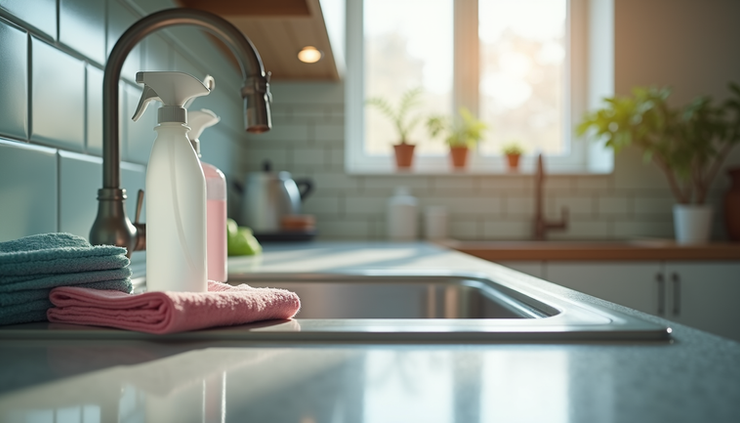
Safety Precautions When Using DIY Sanitizers
Always label homemade solutions clearly.
Store bleach and other chemicals out of reach of children and pets.
Test sanitizers on a small area first to check for surface damage.
Use gloves to protect your skin.
Ensure good airflow to avoid inhaling fumes.
How Often Should You Sanitize Your Kitchen?
Sanitizing frequency depends on your kitchen use:
Daily sanitizing of countertops, cutting boards, and sinks is ideal.
After handling raw meat, poultry, or seafood, sanitize immediately.
Weekly deep cleaning of appliances and less-used areas keeps germs at bay.
Final Thoughts on Kitchen Sanitization
Sanitizing your kitchen is a simple but powerful way to protect your health. Using DIY methods like the bleach dilution solution gives you a reliable, cost-effective way to kill harmful bacteria. Remember to focus on high-touch areas and surfaces that come into contact with food. Regular sanitizing combined with good cleaning habits reduces the risk of foodborne illness and keeps your kitchen a safe place for cooking and gathering.


Hi Jerome,
Thank you so much for sending this beautiful article. It truly touched my heart. I have been a believer in positive energy since 1985, when I first read The Power of Positive Thinking by Norman Vincent Peale. That book changed my life and shaped the way I see faith, healing, mindset, and God’s power at work within us.
This article felt like a wonderful confirmation of what I have lived and believed for decades. Positivity, prayer, gratitude, and spiritual alignment can uplift not only the soul but the body as well. It really resonated with me, and I appreciate you thinking of me and sharing it.
Thank you again for the inspiration. Wishing you continued light, peace, and…